
Power County Clerk Contact
The official Power County office name is Clerk of the District Court, Ex-Officio Auditor and Recorder. The current clerk named in the research source is Sharee Sprague. Idaho Code section 31-2001 is cited on the county page for the ex-officio role, which means the same elected office serves as auditor, recorder, and clerk of the Board of County Commissioners in addition to the District Court clerk role.
Clerk of the District Court, Ex-Officio Auditor and Recorder
Clerk: Sharee Sprague
Power County Courthouse
543 Bannock Avenue
American Falls, ID 83211
208-226-7611
The county clerk page is the main source for the unified office name and duties.
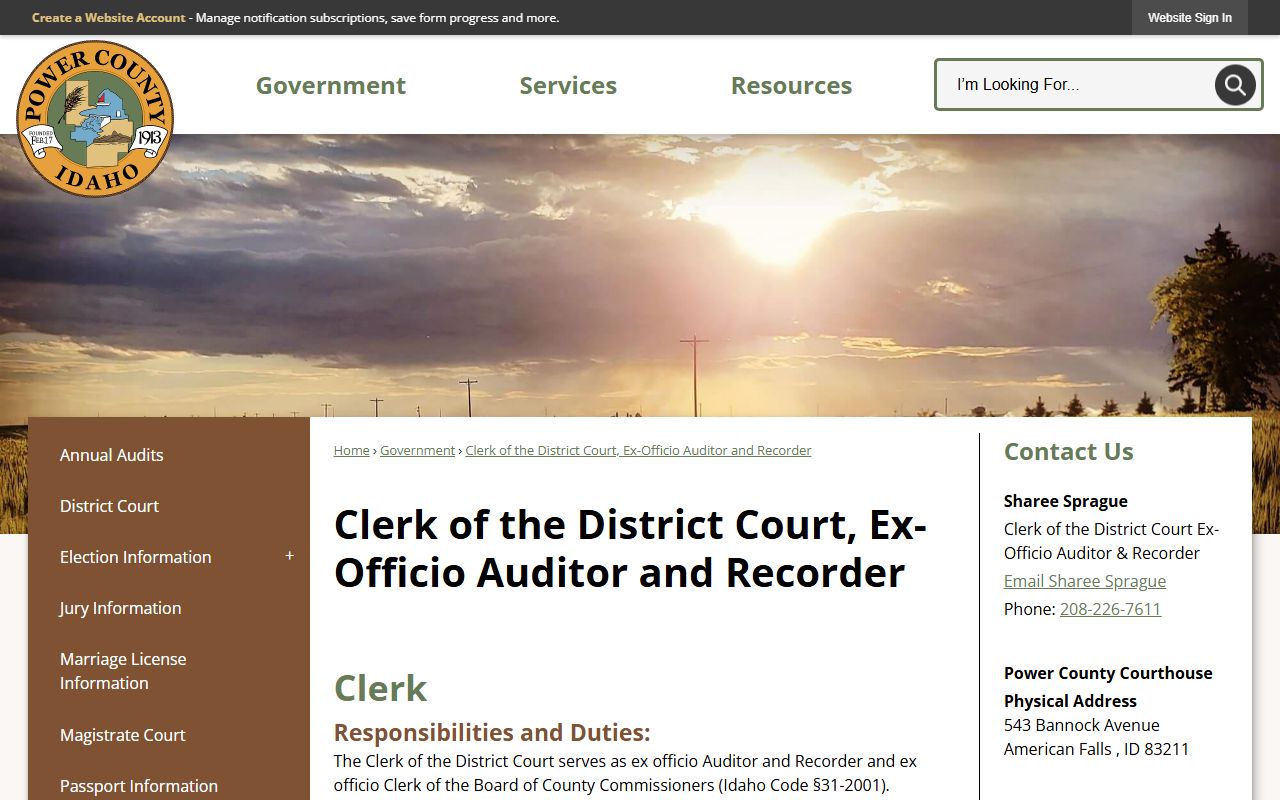
Because one office carries court, auditor, recorder, and board duties, requesters should choose the right form before asking for copies.
Power County Clerk Duties
The clerk is not only a court-records custodian. The office accepts and manages court filings, keeps county recording records, issues marriage licenses, processes passport applications, handles county alcohol licenses, and maintains county records used by the public. The county page also says recorded documents are microfilmed and indexed. Public-use records named by the county include corner perpetuations, survey plats, subdivision plats, microfilmed records, scanned documents, and genealogy materials.
Recorder duties are broad. They include deeds, grants, transfers, mortgages, releases of real estate, powers of attorney, leases, transcripts of judgments or decrees affecting real property, certificates of marriage and marriage contracts, wills admitted to probate, official bonds, mechanics' liens, attachments, notices of pending actions affecting real estate, UCC financing statements tied to certain property, water adjudication notices, and other writings allowed by law. Auditor duties include payroll, accounts payable, taxing-district turnover, inventory, budget process, fund balance management, quarterly and year-end reports, benefits, receivables, internal auditing, reconciliation, levies, and indigent assistance.
- Court records and filings are handled through the District Court clerk function.
- Marriage licenses and recorded documents are handled through the recorder function.
- County administrative and board records use the public-records request path.
- Certified court copies use the separate court records request form.
- Recorded document copies use the recorder fee schedule.
Power County Request Paths
Power County provides two distinct records request forms. The county Records Request page links a general public records form and a court records form. General county records are requested through the public-records form. Court documents, certified court documents, and FTR audio are requested through the court-records form. That split matters for divorce, probate, criminal, civil, custody, and protection-order materials.
The public-records form requires written requests and asks the requester to be specific and concise. The research source says requests are completed within the statutory 3 to 10 days, and the county may contact the requester with estimated charges. Charges must be paid before a record is prepared for delivery. The form also covers denial, partial denial, ambiguity, nonexistence, wrong custodian, and appeal language. A denial or partial denial may be challenged under Idaho Code 74-115 by filing a petition in District Court within 180 days from mailing of the notice.
The clerk staff directory is the source for office and jury contact context.
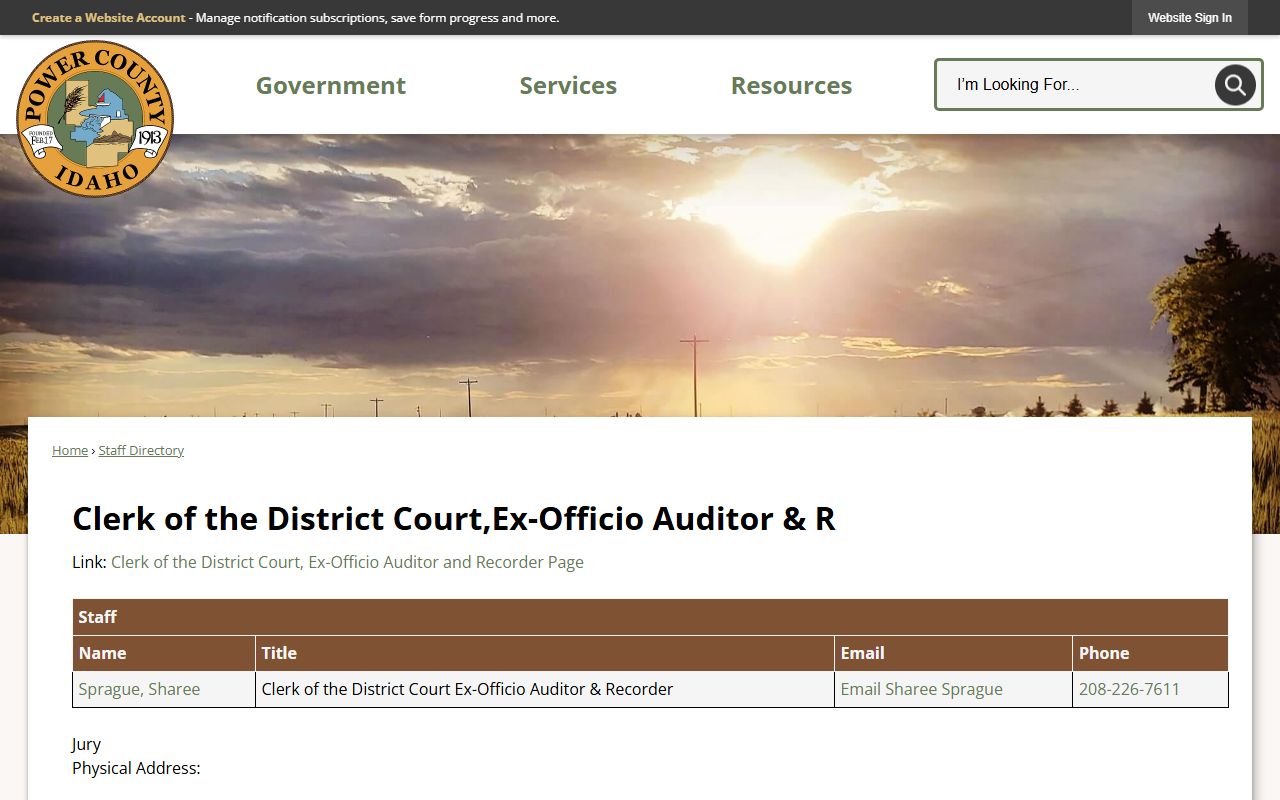
Directory information supports the local contact path when a request needs clerk or jury-office routing.
Power County Public Records Form
The public records request form is for county administrative records, recorder-side public records, and office records that are not court case documents. It asks for contact details, delivery choice, the county office involved, and a specific description of the records. It also includes a certification about mailing and telephone lists under Idaho's public-records chapter.
| Field | Type | Notes |
|---|---|---|
| Name, date, time | Text/date | Requester identity and request timing. |
| Mailing address, city, state, zip | Text | Full mailing address. |
| Phone, fax, email | Text | Contact fields, with fax optional or unspecified. |
| Preferred delivery | Checkbox | Email, mail, or personal pick up. |
| Power County office | Fill-in | Identifies the department or office holding the record. |
| Records identified as follows | Free text | Specific and concise description of the records sought. |
| Signature and certification | Signature | Includes mailing or telephone-list certification. |
Power County Court Request Form
The court records request form is more case-specific because court copies are tied to a case number, case name, case type, document date, hearing date, or audio request. It includes checkboxes for documents, certified documents, and FTR audio. It also asks for a preferred delivery method: pick-up, email, or mail, with extra postage fees for mail when applicable.
| Field | Required Status | Use |
|---|---|---|
| Requester name and date submitted | Yes | Identifies the person making the court request. |
| Mailing address, phone, email | Yes or requested | Used for contact, billing, and delivery. |
| Request for | Yes | Documents, certified documents, or FTR audio. |
| Preferred delivery method | Yes | Pick-up, email, or mail. |
| Case number and case name | Strongly recommended | Helps locate the correct file. |
| Case type | Yes if known | Divorce, child support, adoption, guardianship, juvenile, protection order, criminal, or other. |
| Specific documents or hearing dates | Yes | Needed for document copies and audio requests. |
| Reason or relation | Required for restricted items | Used for exempt, sealed, or confidential case material. |
Request Power County Certified Copies
Certified copies are used when a plain copy is not enough, such as for court filings, benefits, title work, probate administration, or other formal use. The clerk page should not treat all copies alike. A certified court document comes from the court records request form, while a certified recorded document comes from the recorder side under the recorder fee schedule.
- Decide whether the record is a court case document or a recorded county document.
- For a court record, collect the case number, case name, case type, and exact document name or hearing date.
- Check Certified Documents on the Power County Court Records Request Form when the copy must be certified.
- For a recorded document, ask the recorder for the recorded instrument and certification.
- Pay page, certification, seal, postage, or card charges after the county provides or confirms the amount.
Idaho's public-records law supports access to public records, but it does not make sealed court records public.
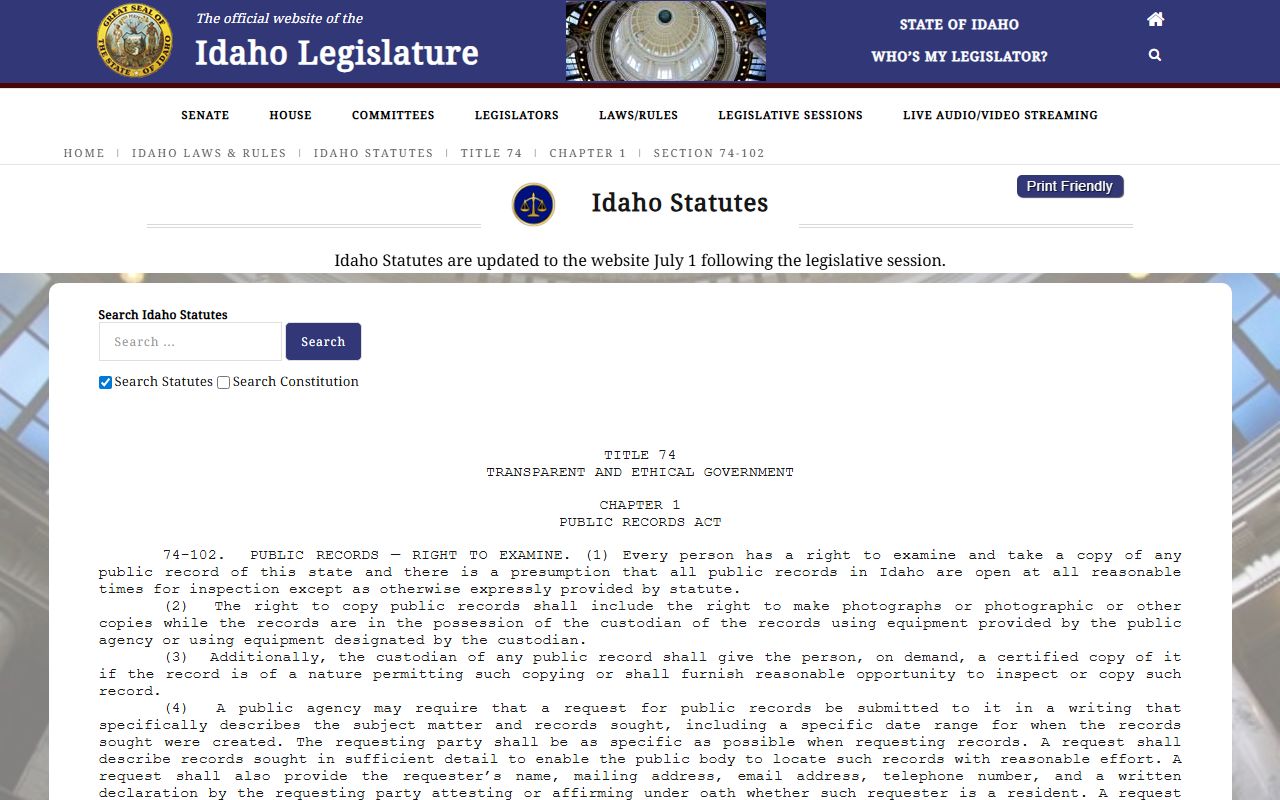
That access right works with exemptions and court confidentiality rules, so the form path still matters.
Power County Clerk Fee Schedule
The official recorder fee table supplies the researched local fee schedule for recorded documents and related services. The court request form separately lists $1 per page and $1 per certification stamp for court-file copies, plus fee lines for audio, deposit, card fee, and total fees paid. Recorder fees apply to recorded instruments, while court copy fees apply to case files.
| Item | Fee |
|---|---|
| Deeds, grants, conveyances of real property, first 30 pages | $15 |
| Trust deeds or mortgages of real property, first 30 pages | $45 |
| Reconveyances, substitution of trustee if included, releases of mortgages | $15 |
| Powers of attorney | $25 |
| Other recording, first page | $10 |
| Each additional recorded page | $3 |
| Copies of recorded documents | $1 per page |
| Certification of copies | $1 |
| Computer printouts | $1 first page, $0.15 each additional page |
| Comparing prepared copy | $0.50 per page |
| Lien searches | $5 per name |
| Marriage licenses | $30 |
| UCC search with copies | $12 per name |
| UCC search only | $6 per name |
| Additional certificate under seal | $1 |
The recorder fee page is the official local fee source for recorded documents.
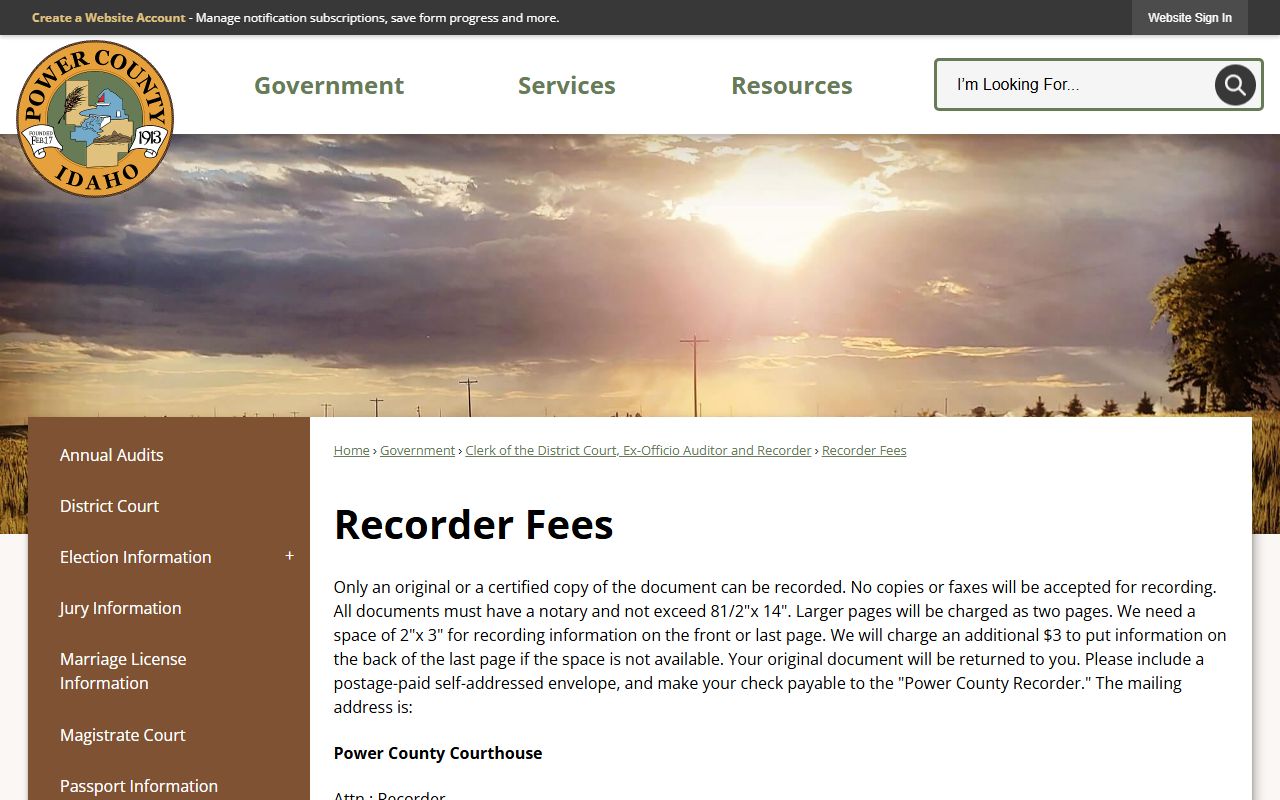
Those fees explain why a certified copy request may include both a page charge and a certification or seal charge.