
Power County Marriage License Rules
Marriage licenses are issued by the Clerk of the District Court, Ex-Officio Auditor and Recorder, acting through the recorder function. The county's marriage license information says a couple must obtain a license from the County Recorder before the ceremony. If the ceremony will take place in Idaho, the couple needs an Idaho license. If the ceremony will take place in another state, that state issues the license. Both applicants must appear together before the deputy clerk, so a Power County marriage record begins as an in-person recorder transaction, not as an online application.
The Power County marriage license page is the source for this license workflow.
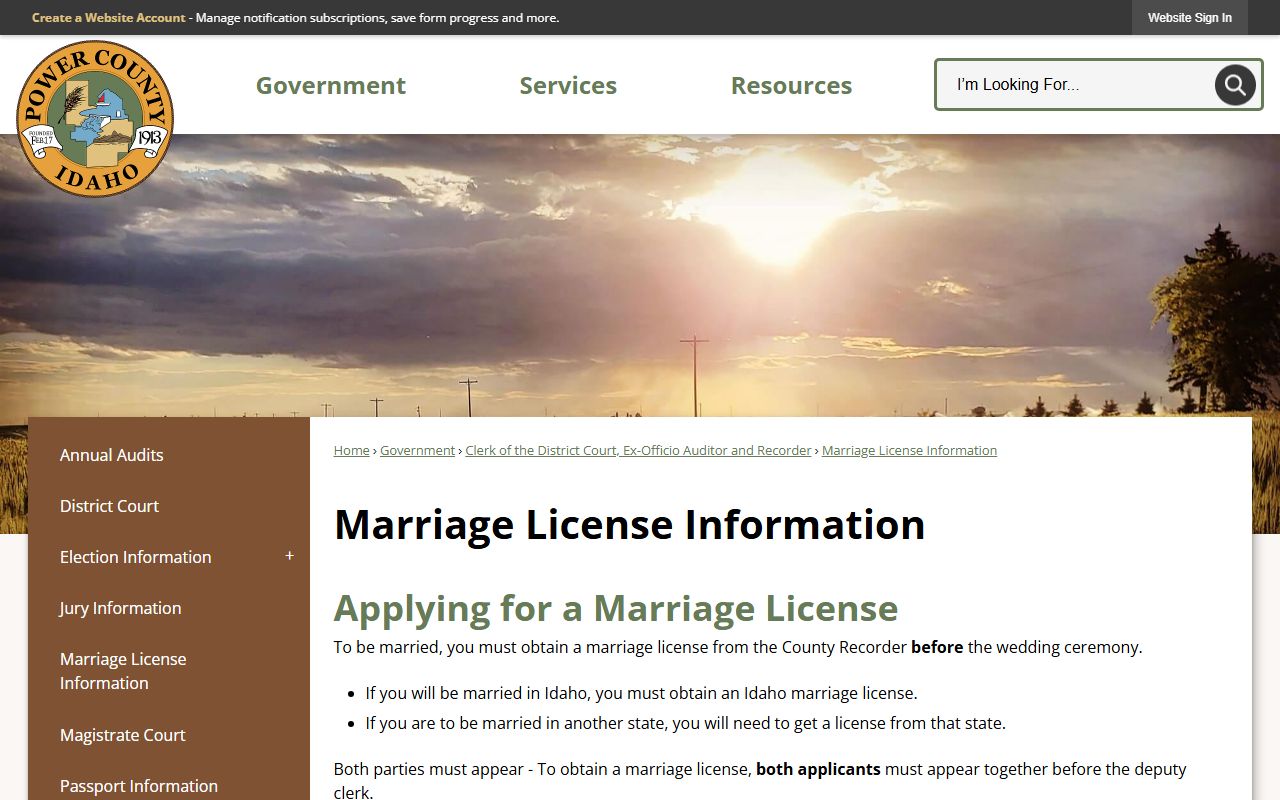
The license page is the local source for the recorder rules that apply before a marriage ceremony can create a record.
Each applicant must bring a nonexpired government photo ID, such as a driver's license, state ID, or passport. Each applicant must also provide a Social Security number. If an applicant does not have a Social Security number, the county page requires a letter from the Social Security office. If that letter says a number is being issued, the applicant must wait until the number can be provided. A denial letter must be paired with a valid passport and proof of entry, such as a visa, entry stamp, or I-94 traveler log.
Apply for Power County Marriage Records
The application process is short, but the county rules are exact. A license does not perform the marriage. It authorizes the ceremony, which must be completed by clergy, a judge, or another authorized official. Power County also warns that scheduling with the office does not guarantee that a judge can perform a courthouse ceremony at that time. Judge availability depends on the court calendar, and the court office is the contact point for ceremony questions.
- Confirm the ceremony will occur in Idaho. A Power County license is for an Idaho marriage, not an out-of-state ceremony.
- Have both applicants appear together before the deputy clerk at the recorder office.
- Bring nonexpired government-issued photo identification for each applicant.
- Provide each Social Security number, or bring the required denial and lawful-entry documentation if no number exists.
- Pay the license fee to the Power County Clerk by an accepted method.
- Use the license for a ceremony by an authorized officiant. The county FAQ says there is no waiting period.
Applicants age 16 or 17 need extra proof and consent. A parent or legal guardian must appear, the minor must provide an original or certified birth certificate, and the parent or guardian must complete the affidavit of consent and show current photo ID. A legal guardian must also provide certified proof of appointment. Idaho Code 32-202 bars anyone under 16 from receiving a marriage license.
Power County Marriage Application Table
No fillable local application was located in the research source, so the field inventory is drawn from Power County's published requirements. These are the data points and proofs a couple should be ready to provide at the counter. The table separates standard adult applicants from the extra proof needed when an applicant is 16 or 17.
| Requirement | Who Provides It | Official Detail |
|---|---|---|
| Personal appearance | Both applicants | Both must appear together before the deputy clerk. |
| Government photo ID | Both applicants | Driver's license, state ID, or passport must be current and nonexpired. |
| Social Security number | Both applicants | Required unless the county's no-SSN documentation path applies. |
| No-SSN documentation | Applicant without SSN | Social Security office letter, denial letter if applicable, valid passport, and proof of entry. |
| Minor applicant proof | Applicant age 16 or 17 | Parent or guardian appearance, certified birth certificate, consent affidavit, and guardian appointment if relevant. |
| Officiant after issuance | Couple | License must be followed by a ceremony by an authorized person. |
Power County Marriage Fees
Power County's recorder fee page and marriage-license page give the local marriage and copy costs found in the research. Divorce filing fees were not located in the official local sources reviewed, so the reliable fee discussion for divorce records is the court-record copy and certification workflow rather than a filing-fee quote. For recorded marriage documents, the recorder side of the clerk's office controls copies and certification.
| Item | Amount | Source or Use |
|---|---|---|
| Marriage license | $30 | Power County Recorder fee table and marriage page. |
| Credit or debit card service fee | Additional service fee | Applies to card transactions on marriage licenses. |
| Copies of recorded documents | $1 per page | Recorder copies, including recorded marriage documents when available. |
| Certification of copies | $1 | Recorder certification charge. |
| Additional certificate under seal | $1 | Recorder seal charge when needed. |
| Court record pages | $1 per page | Court Records Request Form fee section for divorce court documents. |
| Court certification stamp | $1 per stamp | Used when a certified divorce document is requested from the court file. |
The Idaho public records request process supports written requests and agency response timing for county administrative records.
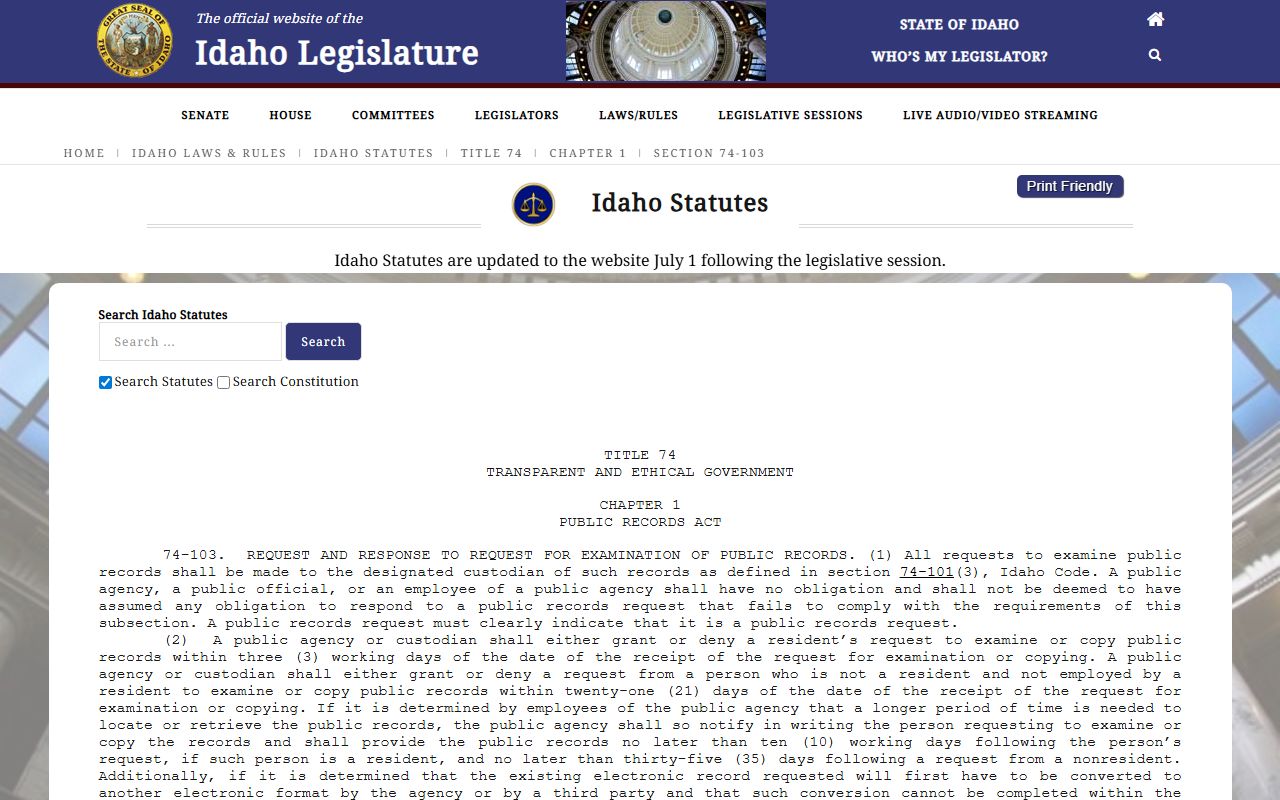
That statute matters when a marriage or recorder request is handled as a county record rather than as a court case document.
Power County Divorce Records Access
Divorce records are court records, not recorder marriage licenses. For Power County divorce records, public case information can be searched through iCourt Smart Search, and hearing dates can be checked through iCourt Search Hearings. Full documents, certified documents, and FTR audio are requested through the Power County Court Records Request Form. The form specifically names Divorce w/Children, Divorce w/o Children, and Child Support/Custody as case type choices.
Search access has limits. The iCourt portal gives general public case information, but full court documents may require the courthouse kiosk or a clerk request. Sealed cases, protected events, and exempt information under Idaho Court Administrative Rule 32 do not appear in public results. Divorce files involving children, custody, adoption, termination, juvenile issues, or sealed materials may require a relationship or reason on the request form and may be reviewed before release.
| Access Channel | Best Use | Power County Detail |
|---|---|---|
| iCourt Smart Search | Public divorce case status and party search | Use name or case number when public access is allowed. |
| iCourt Search Hearings | Upcoming or past hearing lookup | Select Power County and a family-related hearing type when available. |
| Court Records Request Form | Documents, certified documents, or audio | Choose the divorce or child support/custody case type and name specific documents. |
| In person or mail | Clerk assistance and delivery | Mail delivery may add postage fees under the form. |
| Idaho Health and Welfare | Marriage or divorce certificates | State certificate service is separate from the local court case file. |
Idaho Marriage and Divorce Certificates
Idaho's statewide certificate path is separate from Power County's local record path. The county recorder issues and records marriage licenses. The court keeps divorce case files. The Idaho Department of Health and Welfare vital records service handles statewide birth, marriage, divorce, and death record certificate services. A certificate is often used to prove that an event occurred, while a court file may show pleadings, orders, custody terms, support issues, and other case-level details.
The state vital records page is the certificate source for Idaho marriage and divorce records.
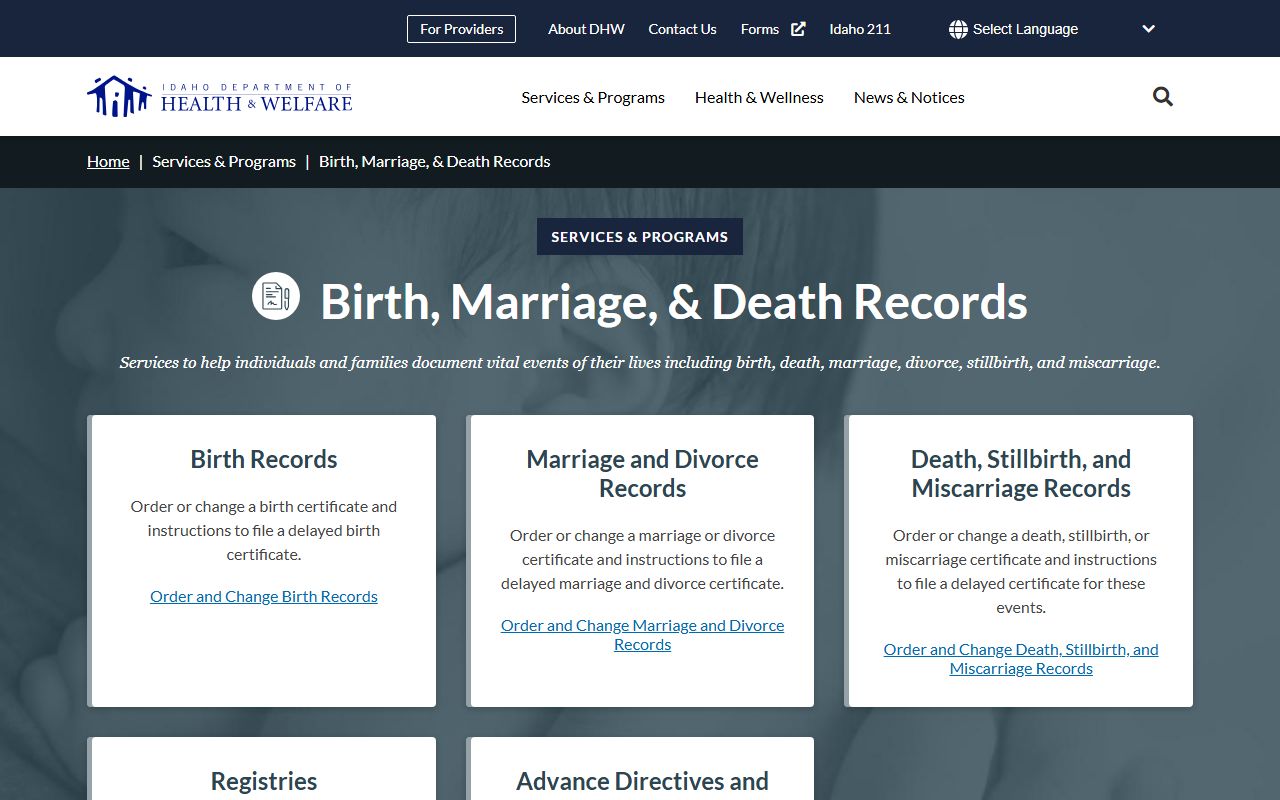
Use the state certificate route when proof of the marriage or divorce event is needed instead of the full local case or recorder file.
A clean split prevents wrong-office delays. A Power County marriage license question goes to the recorder. A divorce decree or case document request goes to the clerk of the court case. A certificate order goes to Idaho Health and Welfare. Family-law forms for starting or changing a divorce, custody, child support, or paternity case come from the Power County Court Assistance Office listing and the statewide Court Assistance Office forms portal.
The Idaho marriage-license statute sets the age floor for license eligibility.
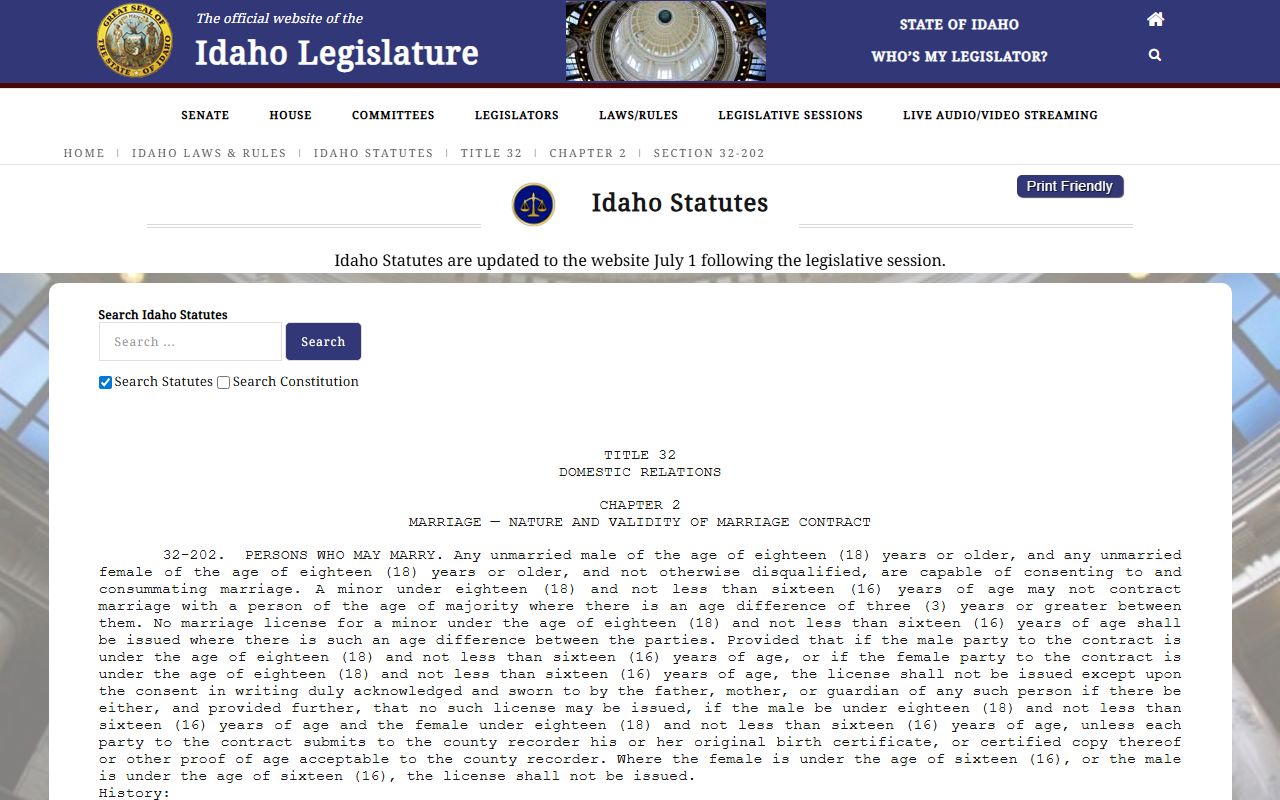
That rule is why minor applicants need a narrow set of consent and proof documents, and why applicants under 16 cannot receive a license.
Power County Family Forms
The Court Assistance Office is relevant for divorce and related family matters because it points users to statewide self-help forms. The Power County local listing names Kaybree Ozburn as the local contact at the courthouse, with phone 208-236-7067. The statewide form topics include divorce, child support, custody and paternity, change custody, change visitation, protection orders, guardianship, name change, and related matters.
Form help is not the same as legal advice, but it is the official Idaho self-help route for common family filings. After a divorce case exists, the record path returns to iCourt for public case information and to the Power County Court Records Request Form for copies, certified copies, or hearing audio. Note: Adoption, termination, juvenile, sealed, and confidential family records may require relationship and reason before release.