
Power County Arrest Records and Charges
Power County arrest records start on the law-enforcement side. They may involve the Sheriff, jail booking, custody status, bond, warrants, holds, or a citation. The Power County jail page states that after booking is complete, an inmate may make a phone call to notify family or friends of custody and charges. The current jail roster is a custody tool, not the full court case file.
Court charge records begin when charges are filed or approved for court action. The prosecutor decides the formal charge after an arrest, citation, or referral. Once filed, the charge moves through the court record as an accusation, plea issue, hearing topic, possible amendment, disposition, and sentence if there is a conviction. The complete case history belongs in Power County criminal court records, while jail custody details belong with inmate and booking sources.
That split matters because a person can be arrested and never convicted, charged with one offense and later see it amended, or booked on a warrant while the court file shows a separate case history. Read the arrest record for custody context, then read the charge record for what the court is asked to decide.
Find Power County Arrest Records
Start with the source that matches the question. For current custody or booking status, use the Power County jail roster or contact the Sheriff's Office. For charges after arrest, use iCourt Smart Search by defendant name or case number. For full documents, use the Power County court records request form through the clerk.
- Check the jail roster when the question is whether someone is currently booked in Power County.
- Use iCourt Smart Search when the question is what court charge was filed after arrest.
- Review charge name, status, hearing dates, case type, and disposition fields when public.
- Request charging documents, certified copies, or audio from the clerk when the public summary is not enough.
- Contact counsel or the court before acting on a felony, probation, sealed, or warrant-linked matter.
The official Power County Prosecuting Attorney's Office source controls the formal charging step after arrest.
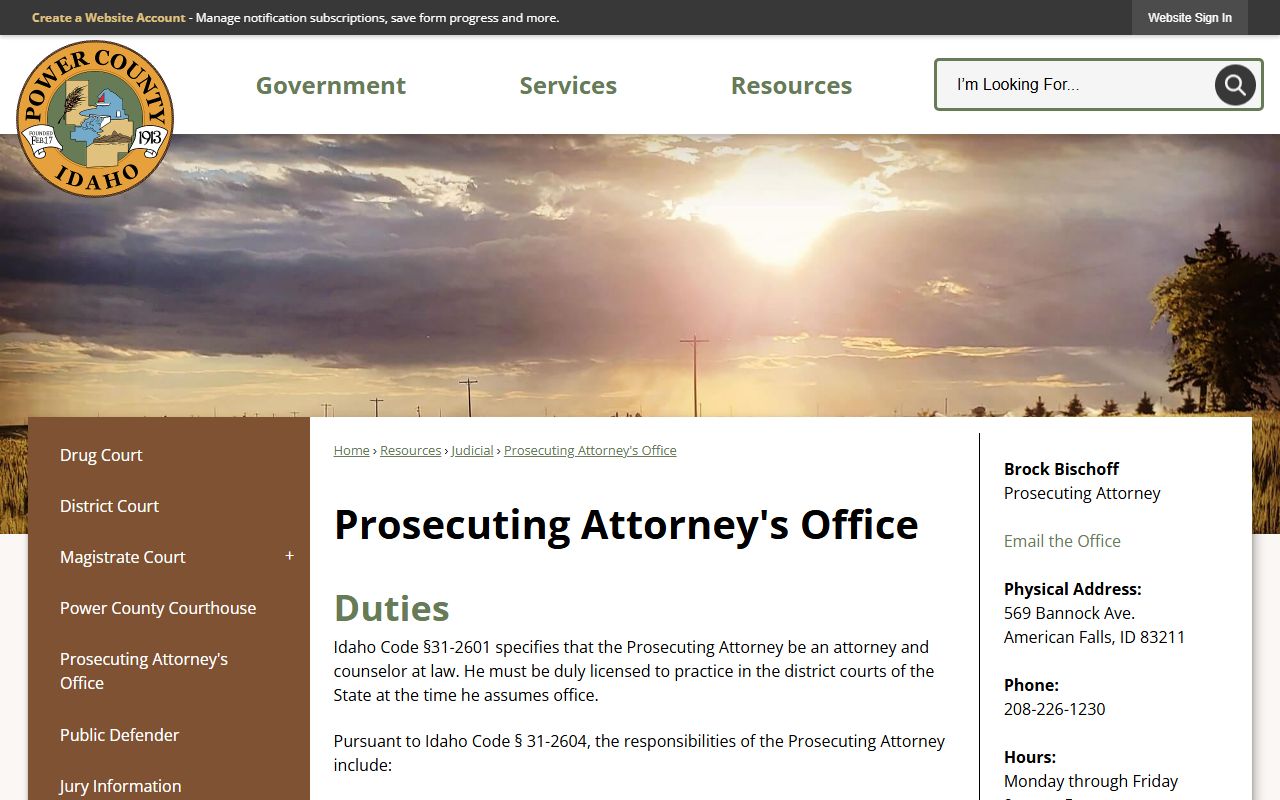
The prosecutor source connects the arrest record to the court charge record because the office prosecutes felony, misdemeanor, and infraction matters within its statutory role.
Power County Charges After Arrest
Charges after arrest can be documented through a complaint, information, or indictment. Power County research confirms the Prosecuting Attorney's duties include prosecuting felony criminal actions, prosecuting qualifying misdemeanor and infraction actions, conducting preliminary criminal examinations before magistrates, and drawing indictments, informations, and accusations. Those duties explain why arrest records and charge records should be read in sequence.
| Document | Filed or Initiated By | Common Use | How It Appears in the Case |
|---|---|---|---|
| Complaint | Officer or prosecutor, depending on the matter | Often starts misdemeanor, citation, or early criminal proceedings | Identifies the alleged offense and begins court processing. |
| Information | Prosecutor | Common felony charging document after required proceedings | States the formal charge the state will prosecute in court. |
| Indictment | Grand jury process with prosecutor participation | Serious or grand-jury-presented criminal allegations | Acts as a formal charging document in the case record. |
Power County Drug Court is relevant because some criminal charges may later intersect with treatment-based court supervision, sanctions, or termination depending on eligibility and case outcome.
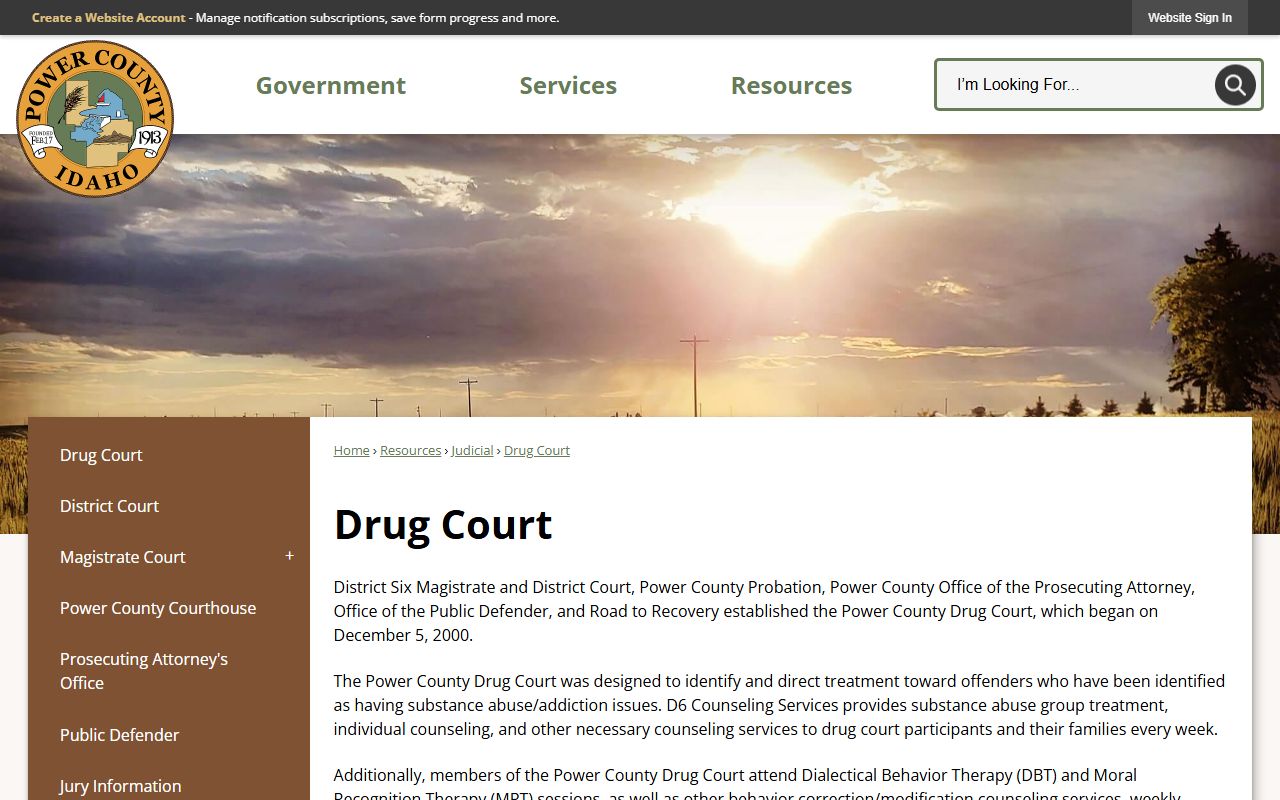
Drug Court does not replace the charging decision, but it shows how some Power County criminal cases may move into a structured court-supervision track after charges exist.
Power County Charge Status Terms
A charge can change after it first appears. Prosecutors may amend or reduce charges. Courts may dismiss charges. A plea may resolve one charge while another is dismissed. A case can also be continued, set for trial, or tied to probation terms. Do not treat the first listed charge as the final result; read the current status and disposition.
| Status | What It Means | Why It Matters |
|---|---|---|
| Pending | The charge has not reached final disposition. | Hearing dates, plea talks, motions, or trial may still be ahead. |
| Amended | The charge language, code, level, or count was changed. | The final record may differ from the original arrest or complaint. |
| Reduced | The charge was lowered to a less serious offense or level. | Sentence, fines, probation, and criminal-history impact may change. |
| Dismissed | The charge was terminated by court action or prosecution posture. | A dismissal is not the same as a conviction. |
| Convicted | The charge ended in a guilty plea, verdict, or qualifying judgment. | Sentence, probation, fines, fees, and relief rules become important. |
Charge vs Conviction
A Power County arrest can lead to one or more charges, but a charge is still an allegation. A conviction requires a final court outcome such as a guilty plea or verdict. Some charges are dismissed, amended, reduced, or resolved without conviction. For that reason, a charge list should always be read with the disposition and sentence fields.
| Point | Charge | Conviction |
|---|---|---|
| Meaning | An accusation filed after arrest, citation, or referral. | A final court outcome on a charge. |
| Timing | Appears near the start of the court case. | Appears after plea, verdict, or judgment. |
| Proof | Not proof the person committed the offense. | Shows legal responsibility unless later relief changes access or effect. |
| Where to Read | Complaint, information, charge list, and docket. | Disposition, judgment, sentencing, probation, and financial fields. |
Note: A public charge record can remain visible even when the final case result is dismissal or a reduced charge.
Power County Jail Charge Context
The jail side can add facts that a court charge search alone does not supply. Power County Sheriff's Office and Detention Division records identify current custody, booking status, bonds, warrants, and holds. The jail page states that a $10 bond fee applies for every bond posted, and that a $10 fee applies for each charge unless charges are grouped under one bond by judge order or for each warrant filed against an inmate. Exact payment is required because the Sheriff and Detention Division cannot provide change.
Accepted bond and bond-fee methods include U.S. currency, cashier checks, money orders, and surety bonds, with cashier checks and money orders payable to POWER COUNTY. Failure to appear can forfeit bond and lead to a warrant. That makes jail charge context important when the arrest record involves warrants, bonds, or missed court dates.
Power County Probation Services connects charge outcomes to supervision and pretrial-release context.
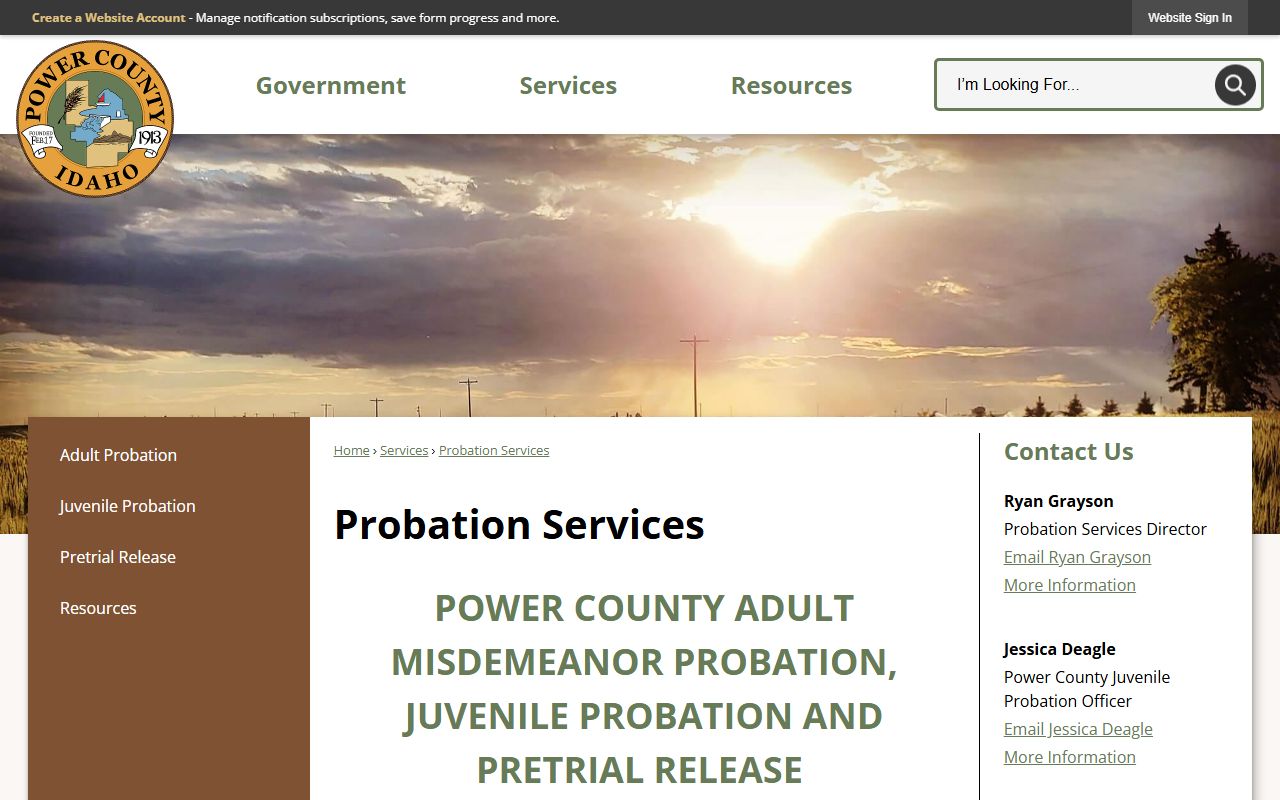
Probation and pretrial-release details may appear after charges are filed, especially when the court imposes supervision or release terms.
Power County Charge Record Fields
Charge records may include more than the offense name. iCourt Smart Search includes party filters such as phone number, FBI number, SO number, and booking number, although not every public result will expose all source data. Court records may show case number, defendant, charge, case type, filing or citation date, hearing dates, court location, judicial officer, status, balance, and disposition. When a payment is eligible, the payment screen may show balance, amount due, and transaction details.
- SO Number
- A sheriff-office related identifier that may help distinguish a person or booking reference when available.
- Booking Number
- A custody-side identifier that may connect an arrest record to a jail booking.
- Disposition
- The final outcome of a charge or case, such as dismissal, conviction, or other court result.
- Bond
- Money or security used to secure court appearance while a criminal matter is pending.
- Warrant
- A court order that may authorize arrest, search, or action after failure to appear.
Power County Defense Context
Charge records also affect defense access. The Power County Public Defender page states that on October 1, 2024, the local Public Defender's Office transitioned to the State Public Defender's Office. Local source material lists Michael Morrissey as Power County Public Defender contact and links to the statewide public defender site. This reform matters because a person facing charges may be routed through Idaho's statewide indigent-defense structure rather than a purely local office.
The official Power County Public Defender page explains the local defense contact path.
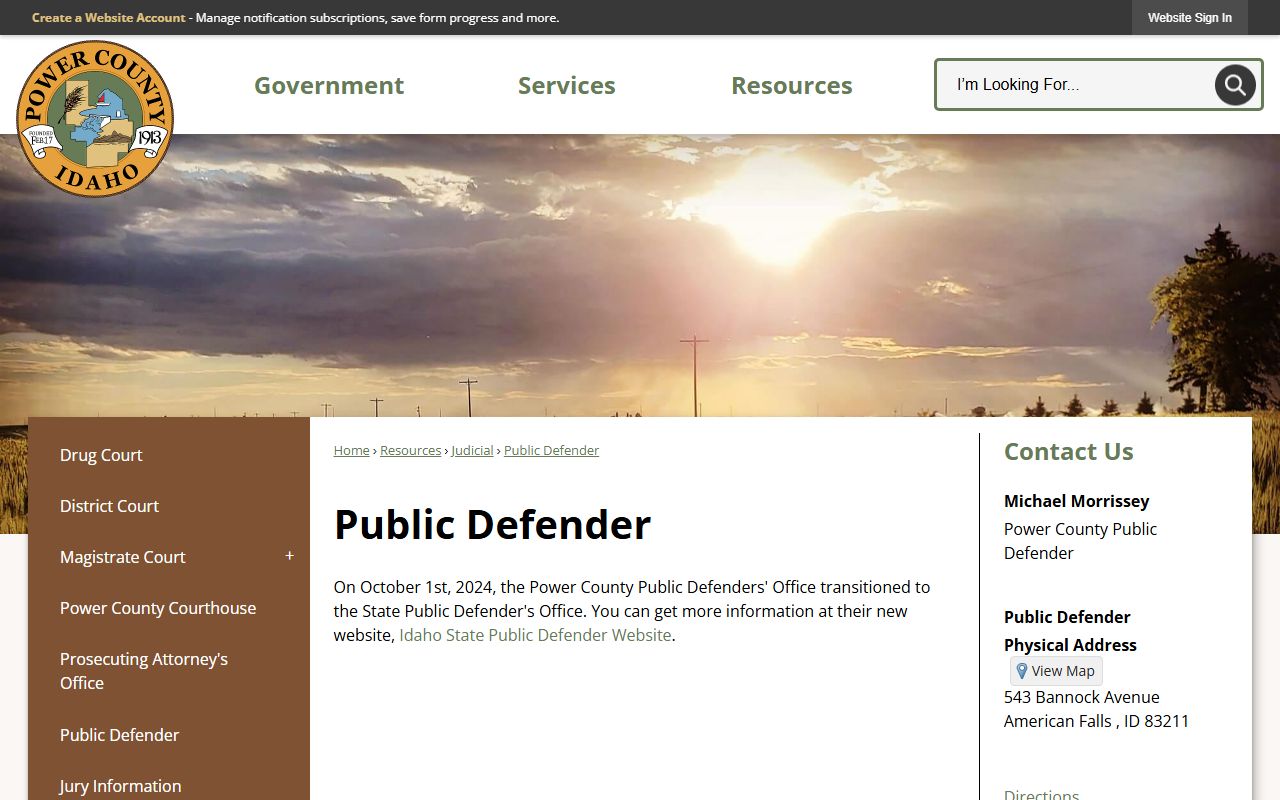
The public defender source is not a charge lookup tool, but it is part of the practical court path after formal charges are filed.
The Idaho State Public Defender source reflects the statewide transition referenced by Power County.
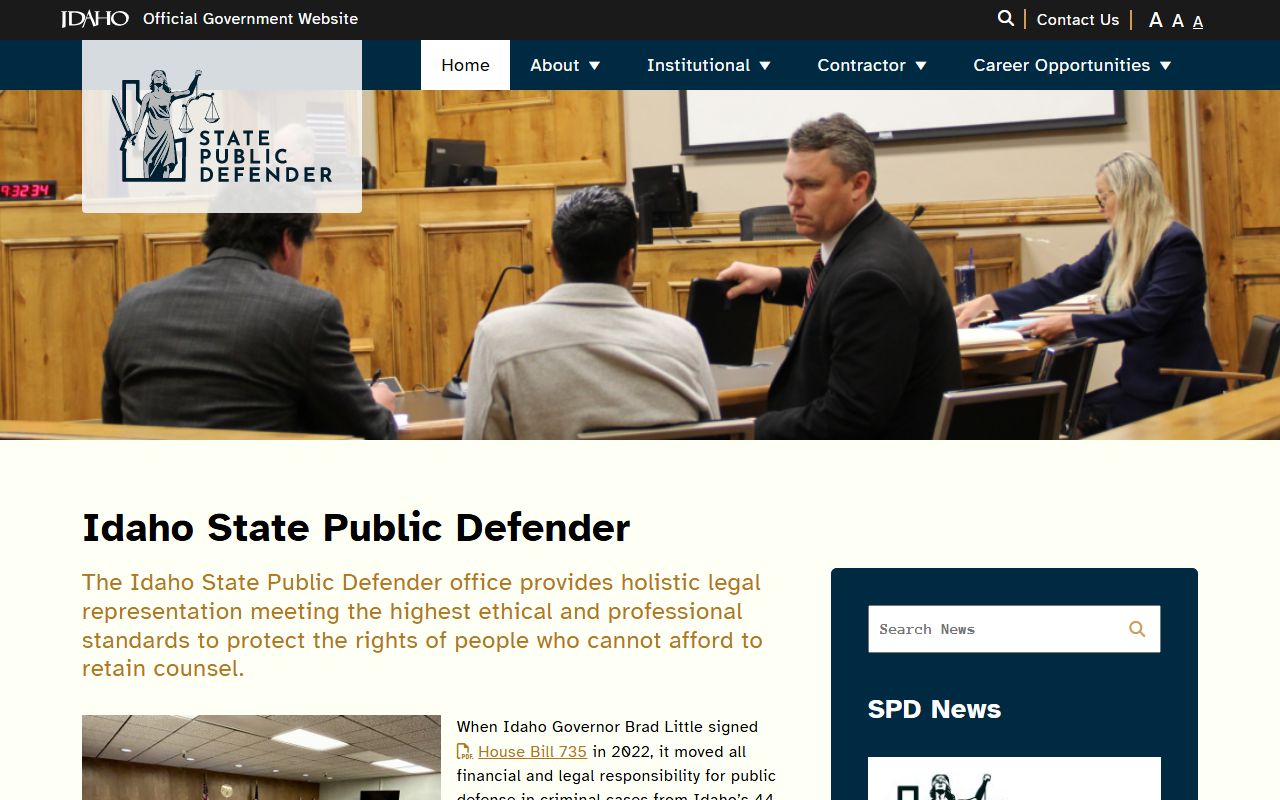
For Power County charge records, that statewide source helps explain why defense administration may not stop at the county office page.
Restricted Arrest and Charge Records
Not every arrest or charge detail is public. Juvenile cases are frequently confidential. Sealed cases and event entries do not appear in public iCourt results. Law-enforcement investigatory records may be exempt or partly exempt under Idaho Code 74-105. Adoption, termination, mental-health, protected-address, and personal-identifier material may be withheld or redacted. A court records request for sealed or confidential files must include the requester relationship and reason.
Clean Slate shielding and other relief can also change public access. Idaho's Clean Slate Act may shield eligible records from public disclosure after the required waiting period and completion of sentence terms. Idaho Code 67-3004 and Idaho Code 19-2604 may be relevant for nonconviction, expungement, withheld judgment, or set-aside questions, but the effect depends on the specific record and statute.